The CGSC Foundation and Alumni Association and its Simons Center hosted an Arter-Rowland National Security Forum luncheon event on Oct. 15, 2026, at the Carriage Club in Kansas City. Entitled “It’s All About the Strait,” the event’s featured guest was Keith Prather, founder and managing director of Armada Corporate Intelligence, who spoke about the Strait of Hormuz and its strategic significance in the global supply chain.
The CGSC Foundation’s Simons Center Deputy Director John Nelson kicked off the Forum welcoming the ARNSF members and their guests. After lunch, he introduced Prather and drove the discussion with him in a “fireside chat” format.
Nelson kicked off the discussion asking Prather why the Strait of Hormuz is so important, other than the obvious flow of crude oil through the area. Prather took the opportunity to walk through some of the background and how disruption in the Strait has a ripple effect on the global supply chain. He spoke about how the Ukraine War has affected the production of Russian diesel, which has other countries, including the U.S., shopping for oil. Ukrainian strikes on refineries and other Russian infrastructure has increased the importance of oil shipping through the Strait of Hormuz. He said before the conflict began there were approximately 125 ships per day transiting the Strait. Today, he said, we’re only getting 20-25 per day through. He added that the pipeline moving from Saudi Arabia into the Red Sea has been struck two or three times by Houthi fighters and is failing as a backup strategy to moving oil through the Strait.
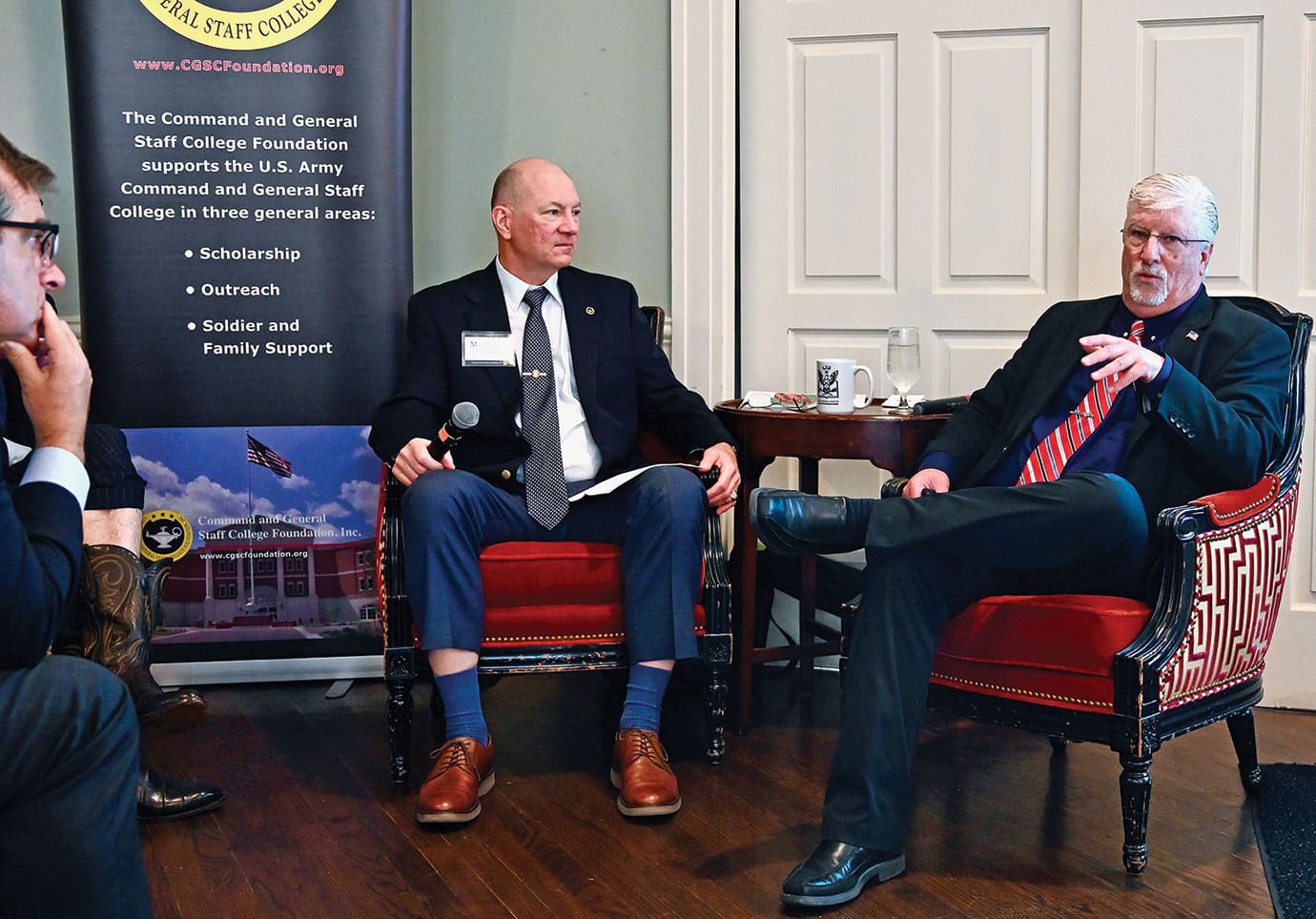
Prather further explained that because the Iran war has affected the amount of oil coming out of the region, it has forced the U.S. to rely on strategic oil reserves. Additionally, bigger premiums on oil are on the horizon because of cost increases stemming from the shipping crisis. Bottlenecks in the Middle East, either through the Strait of Hormuz or the Red Sea, force shipping around the Cape of Good Hope, which adds time and reduces global maritime capacity, while also adding an overall estimated $100 billion to global supply chain costs.
Prather also discussed how conflict impacts other commodities. Maritime crisis adds shipping time and costs that can affect all sorts of products. He provided an example of fiber optic cable which is at a premium now because of its use in the Ukraine War. He also provided an example of how the maritime crisis caused by the Iran war has added 115 weeks to the delivery time for a new large power transformer. Similarly, he discussed bond markets which move on geopolitics, deficits and inflation.
Last, Prather spoke briefly about the role of China in the conflict using a rail route to provide support to the Iranians. China can continue to fund and provide food and other supplies to the Iranians to further extend their ability to survive and lengthen the global crisis. Prather said China loves this conflict…and will continue to do so until they start running out of oil.
Prather concluded with some interesting thoughts about the U.S. midterm elections and the Iran war.
“There’s a thought out there that we get past the midterms, and one of two things happen,” Prather said. “Either we go in and hit infrastructure…bridges things like that. The other thought is what if we get close to November 4 and the IRGC says ‘We’re done.’ – What if oil went from $95 per barrel to $35 per barrel? That would start to inflict a completely different whipsaw kind of impact on the global economy, especially the U.S. The next three weeks will be interesting for all of us.”
Topics Prather addressed during the question and answer period ran from ship building and the need to build more ships to move oil, to the production of raw materials such as steel and copper, and the impact of the price of diesel on small trucking companies.
After the discussion and Q&A, Nelson presented Prather with a small gift in appreciation for his time with the Forum.
For more photos see the CGSC Foundation Flickr album
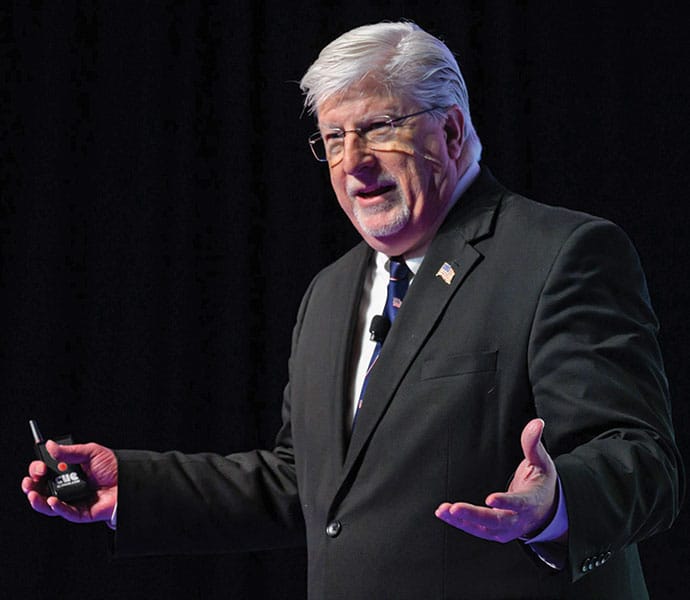
Keith Prather is a managing director of Armada Corporate Intelligence and one of the company’s co-founders. During his time as Armada’s primary strategist, he has worked with Fortune 500 companies spanning strategic risk assessments, economic forecasting, merger and acquisition strategy, and strategic planning. He has pioneered the concept of the Continuous Situation Analysis, much like a corporate version of a military situation report or “SitRep,” that companies use in a fast-paced, aggressive modern business environment.
Prather has also developed a number of proprietary analytical tools that have been used by companies of all sizes. These include planning tools designed to strategically position a company in its competitive market, forecasting of competitive movements in an industry sector, identification of the impact of competitive and economic scenarios, and strategic optioning for high-level corporate strategy. He has worked with teams to understand future global supply chain and credit risk with companies in the Fortune 100.
Prather is the one of the two primary writers for “The Flagship,” an executive intelligence brief. More than 18,000 executives around the world read the Flagship weekly for insight, foresight, and risk intelligence. He is also a keynote speaker for industry associations, conducting more than 50 talks a year.
Prather has an MBA with a focused thesis on corporate intelligence. He is a former chief financial officer and has an extensive background in data analysis.
The Arter-Rowland National Security Forum (ARNSF) is an
exclusive professional information sharing and networking program.
The Arter-Rowland National Security Forum (ARNSF) is led by the CGSC Foundation and Alumni Association and its Simons Center and is an exclusive professional information sharing and networking forum for those interested in keeping abreast of relevant information about national security issues.
Members of the Forum and their guests meet periodically at guest speaker events in downtown Kansas City. National and regional guest speakers representing all elements of national power (Diplomatic, Informational, Military and Economic) highlight the meetings. The Forum is nonpartisan, but elected government officials may present from time to time.
The Forum is named after Lt. Gen. (Ret.) Robert Arter, Founding Chairman of the CGSC Foundation, and Mr. Landon Rowland, the Foundation’s first major donor who was well-known in Kansas City for his keen interest in national security issues and his leadership in business and philanthropy.
ARNSF events are only open to ARNSF members and their guests. If you are not a member but are interested in joining, contact the CGSC Foundation.
The Arter-Rowland National Security Forum is sponsored by: